Coach House Books’ submission “The Sleeping Car Porter” featured on “Across the Pond” podcast
Author Suzette Mayr talks about her Giller Prize winning novel, The Sleeping Car Porter
Transit Books’ submission “A New Name” featured on “Across the Pond” podcast
Translator Damion Searls talks about his translation of “A New Name: Septology VI and VII” by Norwegian author Jon Fosse.
Across the Pond: Ep. 43 Damion Searls, "A New Name" (Jon Fosse) on Apple Podcasts
Unnamed Press’ submission “New to Liberty” featured on the “Across the Pond” podcast
Author DeMisty Bellinger joins the podcast on her debut novel about a rural Kansas town where the Dust Bowl and its legacy haunt two emotionally connected families.
https://podcasts.apple.com/us/podcast/ep-41-demisty-bellinger-new-to-liberty/id1557842312?i=1000580024804
Open Letter Books’ submission “Wolfskin” featured on “Across the Pond” podcast
Translator Katie Whittemore talks to “Across the Pond” about her translation of Lara Moreno’s Wolfskin, Open Letter Books’ submission for the 2022 Republic of Consciousness Prize, US & Canada:
https://podcasts.apple.com/us/podcast/ep-37-katie-whittemore-wolfskin/id1557842312?i=1000571188589
“Across the Pond” hosts authors, translators of nominated titles for 2022 Republic of Consciousness Prize!

We are thrilled to announce that “Across the Pond,” an acclaimed books podcast hosted by writer, bookstore owner Lori Feathers and author, publisher Sam Jordison, is producing an occasional podcast series highlighting fiction titles nominated for the 2022 Republic of Consciousness Prize for Small Presses in the United States and Canada.
Bookmark this page https://www.republicofconsciousnessprize-usa.com/blog to keep up with newly released podcast episodes!
Episode 36: Author Hans von Trotha and translator Elisabeth Lauffer discuss Pollak’s Arm (submitted by New Vessel Press)
But for a Small Press, continued
Did you know that some of our most admired contemporary writers were first published by a small press? These authors might be undiscovered today if not for the bold initiative of a small press that took the creative and financial risk to publish that debut novel or story collection.
Over the next few months we want to highlight some of our favorite debuts by authors whose careers were launched by a small press--books that definitely belong on your reading list.

O Fallen Angel by Kate Zambreno (Chiasmus Press; 2010)
An absolute gem and personal favorite, Kate Zambreno’s O Fallen Angel (reissued by Harper Collins in 2017) explores the interior lives of Mommy, her twenty-something daughter, Maggie, and homeless immigrant, Malachi. While Maggie is self-destructive, and Malachi suffers visions and aspires martyrdom, Zambreno reveals the self-satisfied, Midwestern housewife, Mommy, as the most disturbed and pernicious of the trio. Short chapters at the beginning and the middle of the novel feature a Greek chorus whose refrain laments the daily, unremarked deaths of ordinary people. Meanwhile Maggie, sex-craved and despairing, cannot reconcile her desire to be free from Mommy with her need to be loved, and she is tormented by the vengeful Furies as she fights to extinguish Mommy’s influence in her life.
In the dozen or so years of her impressive and label-defying writing career Zambreno has made her mark as an author who probes her subjects’ consciousness (and oftentimes her own) with an honest intensity that is unsettling, painful, and very often, bitingly funny. O Fallen Angel is no exception with its depiction of Mommy, a woman overflowing with proud self-regard and narrow-mindedness and also Zambreno’s clever word puns, deployed to surprising and satisfying effect.

McGlue by Ottessa Moshfegh (Fence Books; 2014)
Reissued by Penguin Books in 2019 following the success of the novels Eileen and My Year of Rest and Relaxation, and the story collection, Homesick for Another World, Moshfegh’s tense, atmospheric novella, McGlue represents the author’s initial foray into the ranks of published authors. And what a remarkable debut it is! McGlue tells the story of a sailor of the same name, an incurable drunk, who is accused by his shipmates of murdering his friend and fellow sailor, Johnson during a stop in Zanzibar. In the months that follow the ship slowly makes its way back to the US while McGlue, locked in the ship’s hold and suffering from delirium tremens, dreams of past exploits with Johnson at various ports of call.
As in her later works Moshfegh explores the liminal space between her characters’ dreams and realities—this blurring of boundaries places readers in the unsettled minds of her protagonists and produces an intriguingly disorienting affect. Perhaps most remarkable is how Moshfegh so ably creates the sodden, sweaty, and unforgiving world of McGlue’s nineteenth century commercial seafarers, a place and time so removed from the contemporary settings of her later novels.

Leaving the Atocha Station, by Ben Lerner (Coffee House Press; 2011)
Ben Lerner’s first works were poetry collections published by the wonderful independent poetry house, Copper Canyon Press. A few years later Leaving the Atocha Station, his first novel, was released by Coffee House Press. Its protagonist is a young American poet, Adam Gordon, on fellowship in Madrid, who worries that he is incapable of having “a profound experience of art,” unlike the people he sees at art museums, music performances, and poetry readings, who appear to be truly moved by art. His immediate response is to increase his daily dosage of tranquilizers, which does nothing to relieve his acute self-consciousness and smug distain for Madrid’s amateur art scene.
Adam claims poor Spanish as an excuse to not communicate with his friends and lovers in an open and authentic way. This exploration of how we manipulate speech for our own ends is a theme that Lerner takes up in later novels, such as The Topeka School. While Adam, in many ways, is a disagreeable protagonist, it is easy for the reader to be charmed by his egoism and cynical view of human nature. Though jaded Adam retains an abiding faith in the potential of words, deeds, and art, so long as they remain in the “flattering light of the subjunctive.”
But for a Small Press…
Did you know that some of our most admired contemporary writers were first published by a small press? These authors might be undiscovered today if not for the bold initiative of a small press that took the creative and financial risk to publish that debut novel or story collection.
Over the next few months we want to highlight some of our favorite debuts by authors whose careers were launched by a small press--books that definitely belong on your reading list.
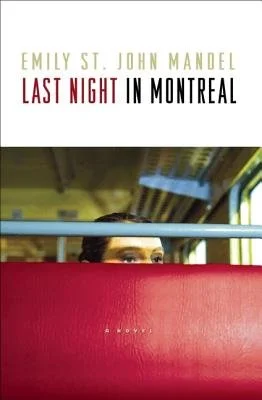
Last Night in Montreal by Emily St. John Mandel (Unbridled Books; 2009)
Canadian novelist Emily St. John Mandel, best known for the novels Station Eleven and most recently, The Glass Hotel, populates her books with characters who reinvent themselves--shapeshifters who create new identities by severing ties to home and sliding into worlds very different from those of their birth.
Such is the case with Lilia, the protagonist in Mandel’s debut novel, Last Night in Montreal. Lilia’s childhood is a continuous routine of flight and subterfuge after her beloved father steals the youngster from her mother’s home one night, never to return. Lilia and her father are pursued by Christopher, a private investigator, whose years-long search for the missing girl becomes an obsession. Encouraged by her father Lilia assumes various aliases and frequently alters her appearance as the two drive from town to town, afraid to settle anywhere and always remaining elusive. Years later Lilia lives a seemingly ordinary and quiet life in New York City with her boyfriend Eli until one morning she inexplicably vanishes, leaving Eli no choice but to embark on this own journey in an attempt to find her.
As with her later novels Mandel captivatingly explores the process of becoming someone else, the provocation to transform, and the price it exacts. The lines that define Lila’s present and past, performance and life, memory and invention, blur together until their borders are difficult for her to recognize. Mandel explores how Lilia’s peripatetic life is the physical expression of her restless quest for meaning and identity. Last Night in Montreal is an accomplished debut and delves many of the themes that Mandel imaginatively returns to in very diverse contexts in her later novels.

John Crow’s Devil by Marlon James (Akashic Books; 2005)
Marlon James’ remarkable debut novel, John Crow’s Devil, depicts a Jamaican village upended by the sudden appearance of a messianic preacher, the “Apostle.” Everyone in Gibbeah knows the local pastor Hector Bligh, “the Rum Preacher,” whose church presides over a community as steeped in religion as it is in magic. But Bligh is a public drunk, and the villagers have lost any respect for him. “So tormented was he by his own sin that he could never convict them of theirs.” When the Apostle arrives, usurping Pastor Bligh and teaching of God’s retribution, nearly all of the villagers rally to him, and stories of the Apostle’s miracles spread throughout the community, precipitating a cult of personality. However one of the villagers, Mary, takes in the disgraced Pastor Bligh, demonstrating a Christian grace that stands in sharp relief to the Apostle’s call for brutal, public lashings of Bligh and all whom he identifies as transgressors.
Gibbeah’s villagers, like characters throughout James’ novels, undergo crises of conscience arising from their desire to belong. In John Crow’s Devil the author explores how this need shifts the community’s axis of morality as each member is forced to determine whether to subsume her personal conviction to the collective will of the Apostle and his followers. This debut introduces readers to James’ layered, Faulknerian style of narration and Patios-infused speech, talents that he also uses to extraordinary effect in his later novels, such as A Brief History of Seven Killings, and Black Leopard, Red Wolf.

The Wallcreeper by Nell Zink (Dorothy, a publishing project; 2014)
It’s said that author Jonathan Franzen discovered Nell Zink. Nonetheless a tiny press, Dorothy, a publishing project, gets all of the credit for taking a chance with the publication of her quirky, debut, The Wallcreeper. Tiffany narrates the story of her unconventional marriage to Stephen, an egoist and obsessive bird watcher. The couple marry and immediately move to in Switzerland where Stephen takes an R&D job at a pharmaceutical company. Stephen’s life is directed by his impulses—he abruptly leaves home on weeks-long birding expeditions, has affairs, quits his job, and becomes an environmental crusader. Meanwhile Tiffany surrenders to any and all of Stephen’s whims. “I couldn’t come up with a step that I’d taken in life for my own sake…I’d done all kinds of things, all of them with the aim of staying close to a man. It hadn’t occurred to me to be ashamed of myself.”
Tiffany, like many of Zink’s young women, is almost totally devoid of sentimentality. She’s funny, irreverent, honest, and personifies a theme that Zink explores in each of her novels—uncovering self-worth by living life with intention. Zink places her female protagonists in unusual relationships and circumstances that magnify the absurdity of many of our preconceived notions and biases. In The Wallcreeper many of these traits are reflected in the traits and habitats of the bird species that Tiffany and Stephen pursue. With Zink it’s always a weird and humorous ride, one in beautiful defiance of the typical dysfunctional family novel.
2021 Books That Our Judges Love
We are so very excited to begin reading submissions for the inaugural, 2022 Republic of Consciousness Prize for small presses in the United States and Canada. (Submissions for the 2022 publishing year open October 1, 2021. For eligibility criteria and submission forms to to: www.republicofconsciousnessprize-usa.com/submissions)
In the meantime, three of our 2022 judges--Michelle Malonzo, Ben Fountain, and Lori Feathers--share some of their favorite small press reads from 2021.

Dreaming of You by Melissa Lozada-Olivia (Astra House) is the ultimate pop-rock opera. It's a poetry collection, a memoir, and a song crafted as one. It's a zombie-horror-fantasy wet dream. It's a book in verse. And in short, it's about a poet who resurrects Selena from the dead. Needless to say this book cannot be categorized. Each page reverberates with desire, grief, and longing. There is a grotesque love affair unfolding on the page between the cast, Melissa, Selena, and Yolanda that is awkward and unholy but also full of tenderness and heart. Dreaming of You is a love story and a tribute to womanhood, a critique of celebrity culture and an ode to Selena and what she signified for so many of us. It's a book that redefines narrative, myth and magic and I will forever be haunted by Melissa's creation. --Michelle
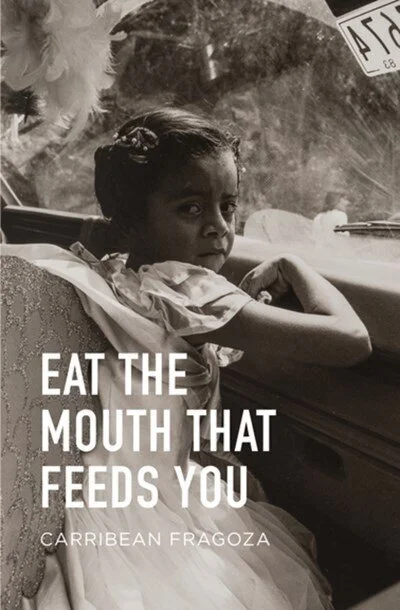
Eat the Mouth That Feeds You by Carribean Fragoza (City Lights) is ferocious, gothic, utterly fantastic and unabashedly Chicanx. The short stories in this collection are grotesque, heartbreaking, bizarre, beautiful, and full of wonder. Fathers are often absent and Mothers - their grief, pain, and fortitude - are the foundation of many of these stories with the children being the harbinger of change, hope and destruction. The stories will slice you in two. The prose in this collection feels so terrifically tight that reading these stories feels like an unraveling. If you read The Secret Lives of Church Ladies, then I strongly suggest you read this magnificent book. --Michelle

Funeral for Flaca by Emily Prado (Future Tense) is a Chicanx coming-of-age memoir. Prado traces and sorts through her own identity and sense of becoming through key moments throughout her childhood, adolescence and into adulthood. With candor, heart, and humor she dissects her very being - coming to terms with the parts of herself that are hers alone and that which has been forced upon her by others. It's about losing and mourning your sense of self and finding joy in who you decide you get to be. In Funeral for Flaca Prado sheds all her skins and does so openly on the page and shares that with us. Reading this book is a lesson in self-care and vulnerability. Funeral for Flaca is a tender debut of a powerful new voice. --Michelle

The Accommodation: The Politics of Race in an American City by Jim Schutze (Deep Vellum) is a classic, unsparing account of racial politics and white supremacy in Dallas. This outstanding book was first published in 1986 by the Citadel Press of Secaucus, New Jersey, after its original publisher, Taylor Publishing Company of Dallas, dropped the book under intense pressure from the city’s establishment. Reading the book, you’ll see why: Schutze delivers a damning narrative of racial power politics in Dallas from the city’s beginnings to the 1980s, with particular emphasis on the fire bombings and expropriation of black-owned property in the 1950s. Now reissued by Deep Vellum Publishing, this suppressed, hard-to-find classic will hopefully now find the wider audience it justly deserves. –Ben

As You Were by Elaine Feeney (Biblioasis) is a not-to-be-missed debut novel--smart, witty, and very engaging. Feeney’s protagonist Sinead lands in a crowded hospital room with a colorful set of fellow patients whose private dramas soon are made public due to lack of privacy and the indignities of hospital care. Sinead has been the family breadwinner--a successful real estate broker whose skill and ambition provide a comfortable life for her husband and their three young children. But Sinead has kept her cancer diagnosis a secret, and time in the hospital allows ample opportunity to reflect on her feelings toward her loving husband and her past. Two things set this extraordinary novel apart: the amazing writing--lyrical, natural, often very funny, and always affecting; and Sinead, a woman with whom Feeney captures the pain of self-reflection and the stubborn resilience of hope. –Lori

I Will Die in a Foreign Land by Kalani Pickhart (Two Dollar Radio) powerfully renders Ukraine’s troubled past and more recent tragedies as it converges around characters who are witness to the 2013 violent repression of demonstrations in Kiev. More than historical fiction Pickhart explores the cultural and emotional context of what it means to be Ukrainian. With a fresh, bold narrative style that joins reportage and deep character study, Pickhart delivers a series of provocative set pieces that underscore the weight of historical memory and the toll of Russian domination. An eye-opening novel by a stunningly talented writer. --Lori

The Pastor by Hanne Ørstavik, tr. Martin Aitken (Archipelago Books) is another beautiful and haunting gem from this Norwegian author. A quiet, resonant novel in which a young female pastor narrates the story of her self-exile to a sparce outpost in the far North and her relationships with the village locals--a rough, hardworking bunch who hide their vulnerabilities. Amongst descriptions of the pastor’s everyday life we see scenes from her past, including an intense, fraught romance and her research into the historical abuses inflicted on the local indigenous people. Ørstavik’s narrator reflects deeply on the insufficiency of language to explain faith and the nexus between goodness and truth. The Pastor is the fascinating story of a woman in a strange setting who continually probes the vital question of how to live a meaningful life. --Lori